
How to Start Homeschooling in North Carolina: A Step-by-Step Guide
In North Carolina, the paperwork is the easy part. You can open a legal homeschool with one free online form, and the state will never ask to see your curriculum, your lesson plans, or your child’s test scores. The families who struggle in year one almost never struggle with compliance. They struggle with isolation, and isolation has a structural fix, not a motivational one. We will walk through every legal step, what each one actually requires, and where the real work begins once the form is filed.
Is homeschooling legal in NC?
Yes, and it has been since 1988, when the General Assembly wrote home schools into state law under G.S. 115C-563 through 565. North Carolina treats your homeschool as a non-public school, registered with the Division of Non-Public Education (DNPE) rather than the public school system.
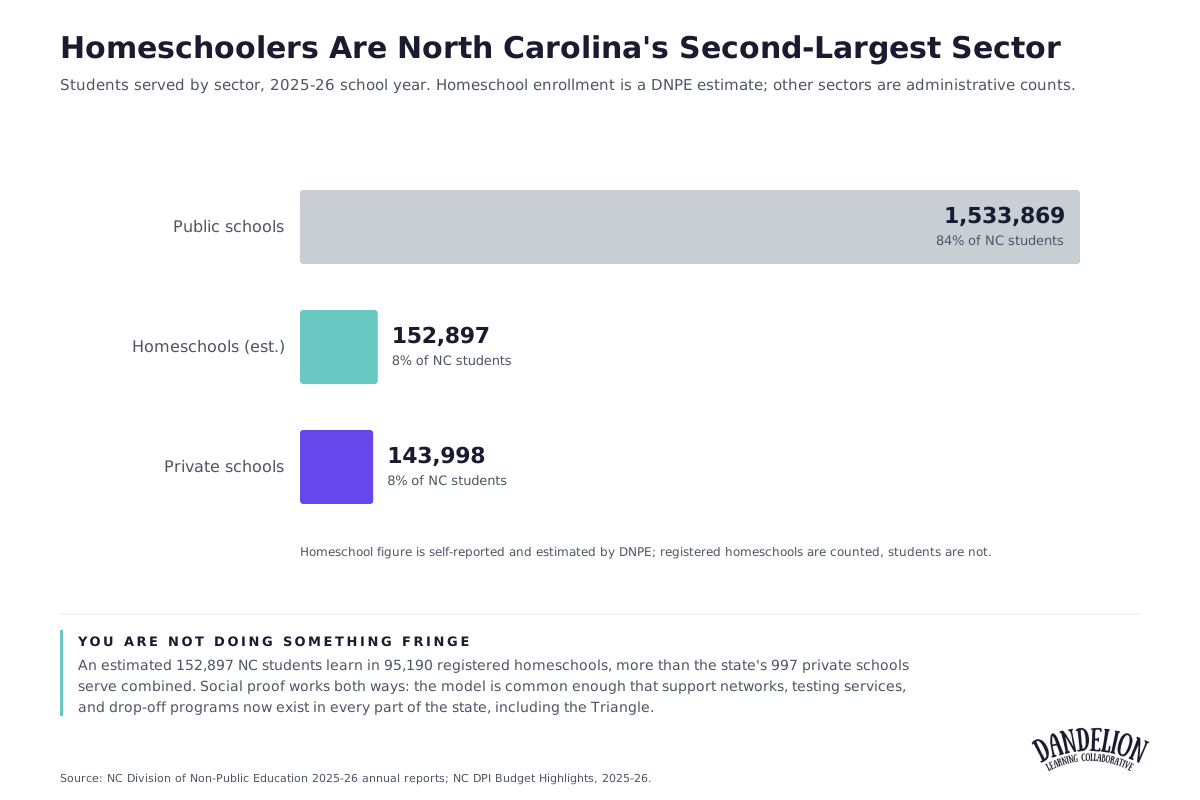
You would be in large company. As of the 2025-26 school year, DNPE counts 95,190 registered homeschools in North Carolina, with an estimated 152,897 students. That is more children than the state’s 997 private schools serve combined (143,998, per NC DPI’s 2025-26 Budget Highlights and DNPE’s annual reports). One honest note: DNPE counts registered homeschools directly, but the student figure is an estimate built from self-reported enrollment.
Step by Step Guide
Step 1: Meet the basic requirements.
North Carolina asks for exactly three things before you begin. You live in North Carolina. The adult running the homeschool holds a high school diploma or its equivalent. And your child falls under compulsory attendance, which runs from age 7 through 16. You can start earlier than 7 by choice, and many families do, but the law only requires schooling in that window. One deadline hides here: you cannot open a homeschool for a student who has already turned 18, so a late start has a hard stop.
No teaching certificate. No college degree. No background in education. The diploma is the whole bar.
Step 2: Choose a school name and religious or non-religious status.
Your homeschool needs a name, and the name is permanent, so skip the clever pun you will be reading aloud to a college registrar in ten years. Most families use a plain construction like “Carter Family School.” You will also mark the school as religious or non-religious. The designation decides which section of the statute your school files under, and the obligations are identical either way, so answer honestly and move on.
Step 3: File your Notice of Intent (NOI) with DNPE.
The Notice of Intent is the single form that opens your school. You file it online through DNPE, it costs nothing, and it asks for the school’s name and address, the chief administrator (you), and proof of that high school diploma. You file it once, not annually.
Timing is the one trap. DNPE receives new NOIs from July through April and does not accept them in May or June. Decide in late spring and you will wait until July 1 to file, so plan your withdrawal date around that gap.
Step 4: Wait for acknowledgment before withdrawing your child.
Filing the NOI does not end the job. DNPE sends an acknowledgment with your school’s registration, and that document is what protects you when you pull your child out of their current school. Withdraw in writing, give the registrar a copy of your DNPE registration, and keep copies of everything. Families who withdraw first and file second create a window where the child is enrolled nowhere, and that window is how truancy letters happen. File, receive acknowledgment, then withdraw, in that order.
Step 5: Set up your records.
North Carolina requires you to keep three things on file at your homeschool. An attendance record. Immunization records for each student, or the applicable exemption. And the results of the annual standardized test, held for at least one year after your child takes it.
Nobody collects these. You keep them so they exist if DNPE ever asks, and one folder covers all of it in an hour a year. Set it up the week you file and the requirement disappears from your life.
Step 6: Operate on a schedule and meet the ongoing requirements.
Three obligations continue for as long as your school is open. Run the school on a regular schedule for at least nine calendar months of the year, with reasonable holidays and vacations. Give each student a nationally standardized test every year covering English grammar, reading, spelling, and math, and file the results in that folder from Step 5. And tell DNPE if you move or close the school.
Notice what the testing requirement is not. You choose the test from many recognized options, several of which a parent can administer at home. The score goes in your drawer, not to Raleigh. The test exists to give you an annual outside reference point on the basics.
What NC does NOT require
The absences define this state more than the requirements do. North Carolina does not approve or review your curriculum. It does not collect test scores, attendance, or work samples. It does not conduct home visits. It sets no minimum hours per day, no required subjects beyond the basics the test covers, and no portfolio reviews. Once your NOI is acknowledged, the state’s involvement is functionally over.
That freedom cuts both ways: nobody is coming to tell you whether it is working. The state trusts you completely, so the feedback loop is yours to build, through the annual test, outside instructors, and other adults who see your child learn. Families who treat “no oversight” as “no feedback” are the ones who get to March with no idea where their child stands.
Co-ops, tutors, and outside instruction
North Carolina law lets homeschooled students receive instruction from people other than their parents: tutors, co-op classes, group instruction, and part-time drop-off programs are all compatible with your DNPE registration. You remain the school; they become part of how your school teaches.
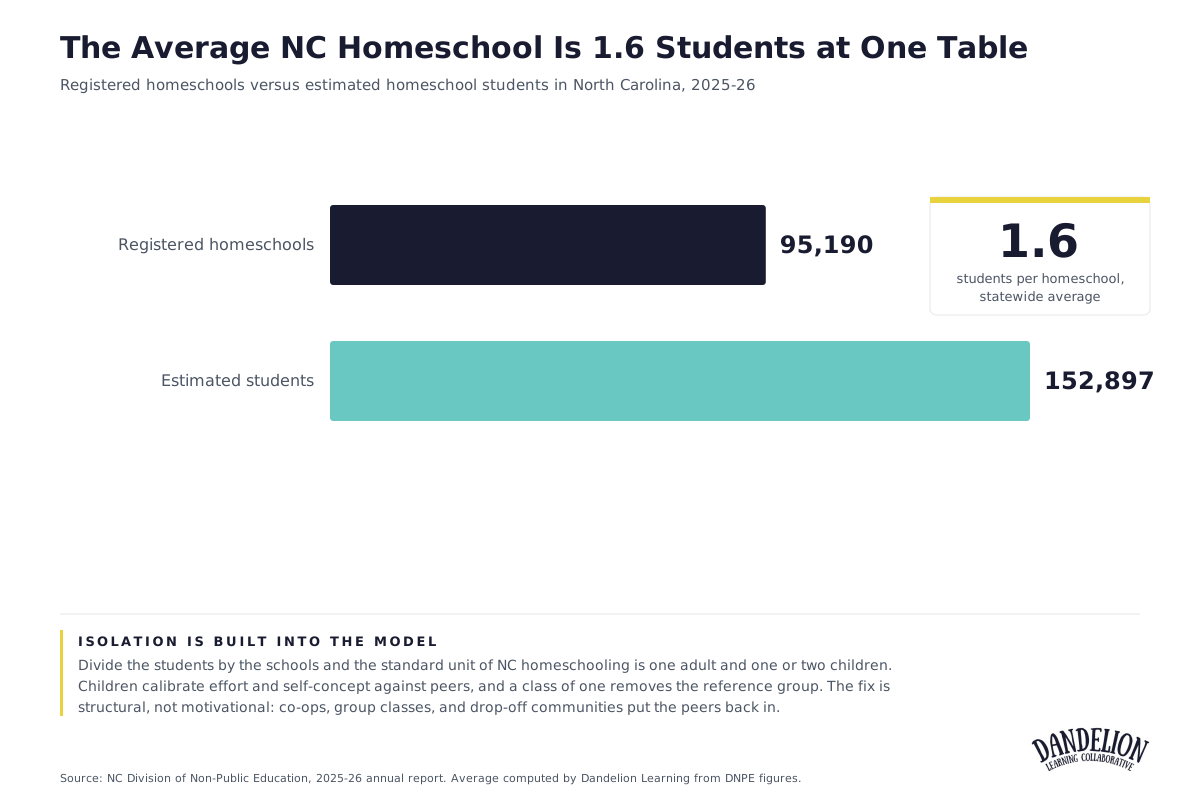
Here is why that matters. Divide DNPE’s 2025-26 figures, 152,897 estimated students across 95,190 registered homeschools, and the average North Carolina homeschool is 1.6 students at one table. The standard unit of homeschooling in this state is one adult and one or two children. Children calibrate their effort and their sense of themselves against peers, and a class of one removes the reference group entirely. That is a design property of the model, not a failure of any parent, which is why the fix is structural: put the peers back in through group classes, co-ops, or a drop-off learning community.
Is there funding for NC homeschoolers?
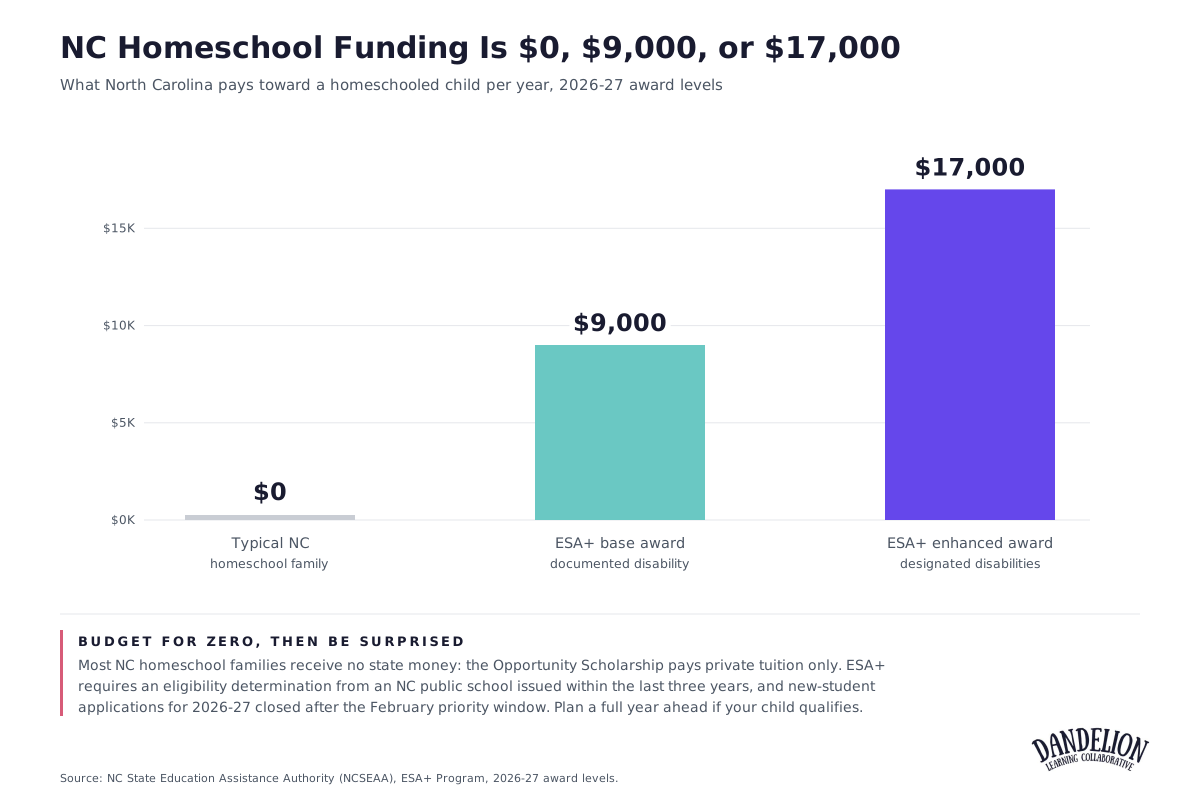
For most families, no, and you should build your first-year budget on that answer. North Carolina’s Opportunity Scholarship pays private school tuition only; a registered homeschool cannot use it. The state’s one funding stream for homeschoolers is the ESA+ program run by the NC State Education Assistance Authority, and it serves students with documented disabilities: a $9,000 base award, or $17,000 for certain designated disabilities, spendable on curriculum, tutoring, and therapies through the program’s ClassWallet platform.
ESA+ has two gates worth planning around. Eligibility requires a disability determination issued by a North Carolina public school within the last three years, so families new to the process start there. And demand outruns funding: new-student applications for 2026-27 closed after the February priority window. If your child may qualify, start the paperwork a full year before you need the money. If your child does not qualify, budget for zero state dollars and let anything else be a surprise.
Common first-year mistakes to avoid
Withdrawing before the DNPE acknowledgment arrives. Covered above, and still the most common legal misstep.
Rebuilding school at the kitchen table. A classroom needs six hours because one adult is managing twenty-five children through transitions, lines, and repetition for the middle of the pack. One-to-one instruction has none of that overhead, so a full homeschool day is routinely finished by lunch. Parents who stretch it to 3 p.m. anyway teach their child that learning is seat time, and habituation does the rest: the novelty fades, the resistance starts, and by November the table is a battlefield.
Spending the whole curriculum budget in July. You do not yet know how your child learns at home, and the child you taught in August is not the child you will be teaching in January.
Panicking about the test. Choose a recognized test a parent can give at home and treat it as your private annual check.
Going it alone. The state’s own data shows what happens to families who enter the model without support. North Carolina’s estimated homeschool population spiked to 179,900 students in 2020-21, and by 2025-26 it had fallen to 152,897, a one-year drop of 12,346 as pandemic-era families returned to classrooms or moved into newly voucher-funded private seats. The spike reverted. The base, built on families with real support systems, did not.
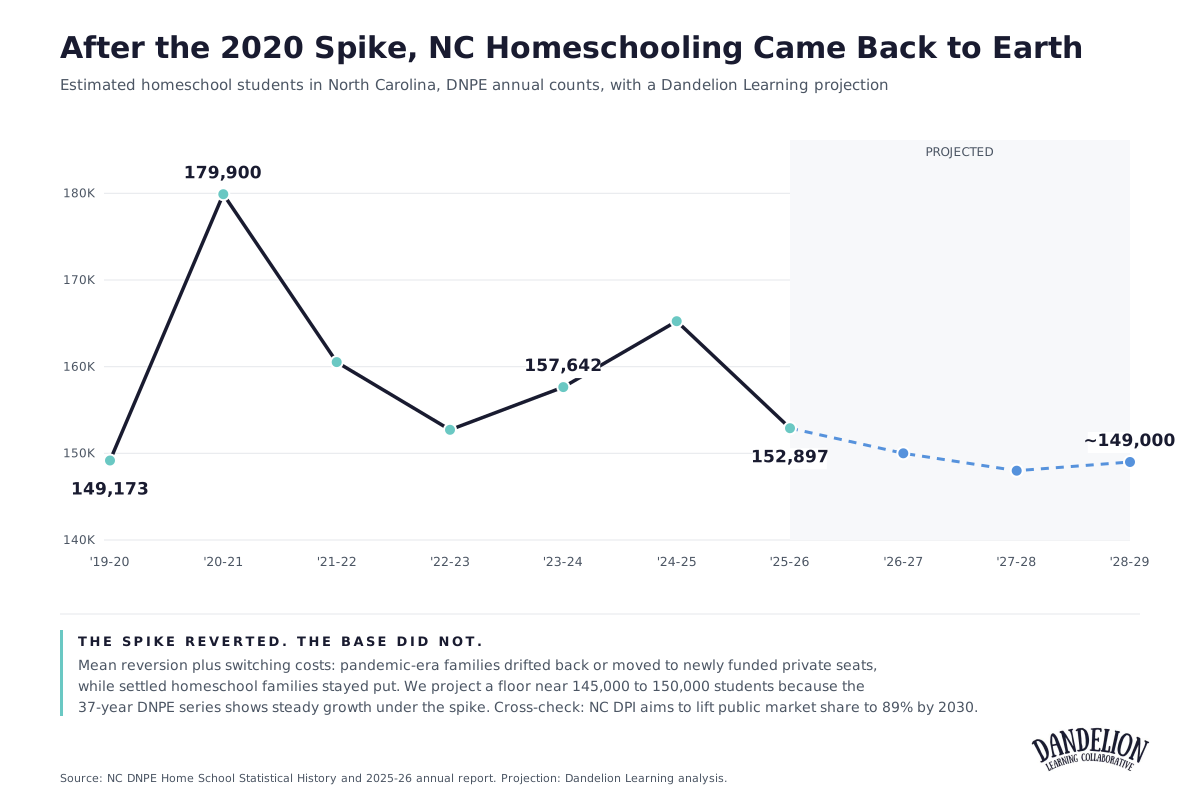
Projection: Dandelion Learning analysis based on mean reversion and switching costs, assuming a floor near 145,000 to 150,000 students because the long-run DNPE series shows structural growth beneath the pandemic spike, cross-checked against NC DPI’s strategic plan target of 89% public market share by 2030 and Johns Hopkins’ measured 5.4% national homeschool growth rate for 2024-25. We weight the DNPE state series most heavily.
You don’t have to do it alone
Homeschooling stopped being a fringe choice while nobody was watching. The Census Bureau’s Household Pulse Survey, as documented by the Johns Hopkins Homeschool Hub, puts homeschoolers at 5.92% of U.S. school-age children in 2023-24 and roughly 6.5% in 2024-25, up from 2.8% before the pandemic, and Johns Hopkins measured 5.4% growth in 2024-25, triple the pre-2020 rate. These are survey-based household estimates rather than administrative counts, and the direction holds across every measure: the infrastructure of co-ops, group programs, and testing services keeps growing because the families keep coming.
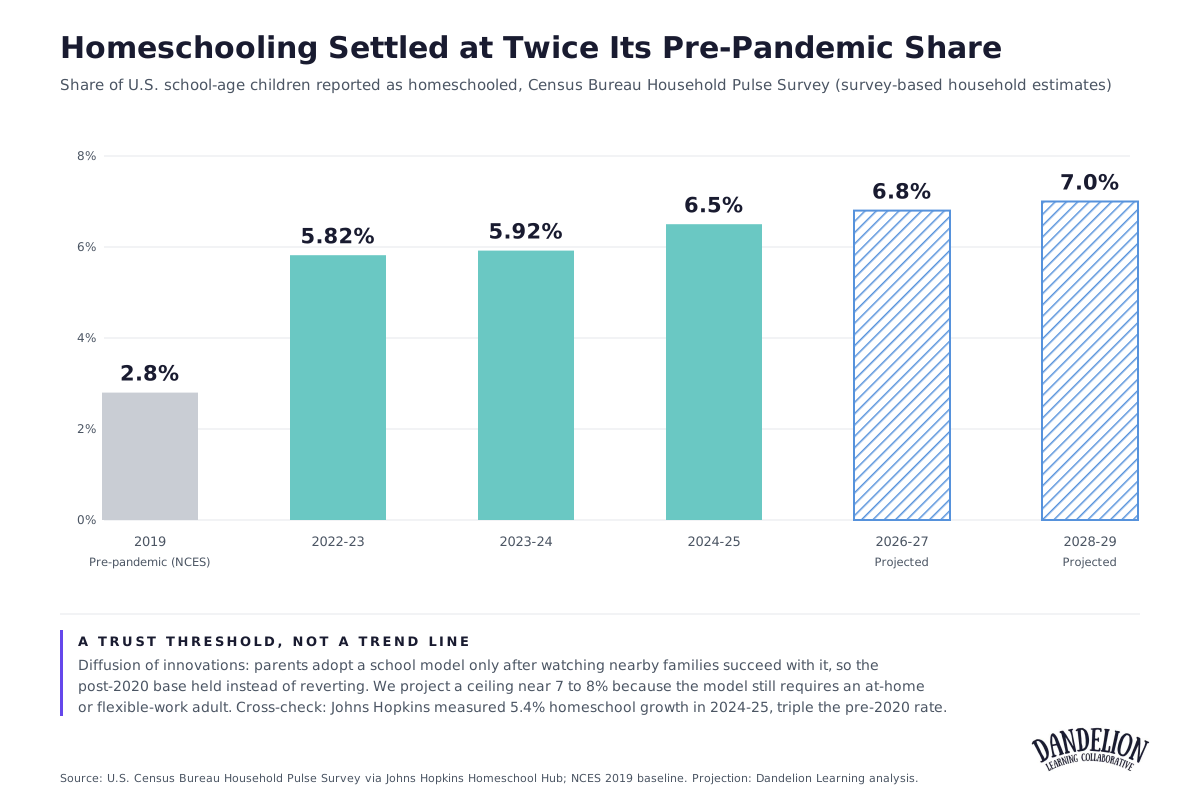
Projection: Dandelion Learning analysis based on diffusion of innovations and trust thresholds, assuming a ceiling near 7 to 8% because the model still requires an at-home or flexible-work adult, cross-checked against the Johns Hopkins Homeschool Hub’s measured 5.4% growth rate for 2024-25.
This is the work Dandelion Learning Collaborative was built for. We are a Montessori-inspired, part-time, drop-off homeschool community in Wake Forest for ages 5 through 12, with state-certified teachers, licensed counselors, a 1:8 staff-to-student ratio, and a radically inclusive, secular room where every child is welcome. We accept NC ESA funds and serve families across Wake Forest, Rolesville, Raleigh, Youngsville, and the Triangle.
So file the form. The paperwork really is an afternoon. Then spend your actual energy where year one is won or lost: on the people, adult and child, who will share the work with you. Come visit us in Wake Forest and see what homeschooling with help looks like.